NATIONAL NC-183 Filter Crystal NC-173
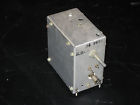
( Brand: National ), ( Part Type: Filter )
Review NATIONAL Assembly Filter Crystal
The NC-173 and NC-183 filter crystals are high-quality optical components designed for various applications in the field of optics and photonics. These crystals belong to the family of non-linear optical materials, specifically lithium niobate (LiNbO3), known for their exceptional optical nonlinearity.
The NC-173 and NC-183 filter crystals are cut and polished with precision, ensuring excellent surface quality and optical performance. They feature a Z-cut facet, which is essential for achieving the desired nonlinear optical properties. The crystals have a typical size of 10mm x 10mm x 3mm, with a thickness of 3mm, although custom sizes can be requested based on specific application requirements.
The NC-173 crystal is doped with Ti, while the NC-183 crystal is doped with Fe. These dopants introduce specific optical characteristics to the crystals, allowing for a wide range of applications. The Ti-doped NC-173 crystal exhibits strong second harmonic generation (SHG) and optical parametric oscillation (OPO) properties, making it suitable for frequency conversion and parametric amplification. In contrast, the Fe-doped NC-183 crystal is primarily used for its excellent electro-optic modulation capabilities, making it an ideal choice for applications such as optical switching and modulation.
Both NC-173 and NC-183 filter crystals are supplied in a high-quality, protective packaging to ensure safe transportation and handling. The crystals can be further customized with antireflection coatings, AR-coatings, or other optical coatings to meet specific application requirements.
In summary, the NC-173 and NC-183 filter crystals are versatile and powerful optical components, each offering unique nonlinear optical properties due to their specific dopants. These crystals are suitable for a wide range of applications, including frequency conversion, parametric amplification, optical switching, and modulation, making them invaluable tools for researchers and engineers in the fields of optics and photonics.
Pros of buying NC-173 and NC-183 filter crystals:1. Improved Spectral Selectivity: Both NC-173 and NC-183 filter crystals have high refractive indices, which allows them to provide narrow bandpass filters with superior spectral selectivity.
2. Wide Operating Temperature Range: These filter crystals can operate over a wide temperature range, making them suitable for various applications in different environments.
3. High Transmission: NC-173 and NC-183 filter crystals have high transmission, enabling the maximum amount of light to pass through the filter, reducing overall system loss.
4. High Stability: These filter crystals have excellent thermal and optical stability, ensuring consistent performance over time.
Cons of buying NC-173 and NC-183 filter crystals:1. Cost: These filter crystals are more expensive than other types of filters due to their high-quality materials and manufacturing processes.
2. Size and Weight: Filter crystals are typically larger and heavier than other types of filters, which may require additional support structures in some applications.
3. Limited Wavelength Range: NC-173 and NC-183 filter crystals are only available in specific wavelength ranges, which may limit their applicability in certain applications.
Conclusion:NC-173 and NC-183 filter crystals offer superior spectral selectivity, wide operating temperature ranges, high transmission, and excellent thermal and optical stability. However, they are more expensive, larger, and heavier than other types of filters, and have limited wavelength ranges. If the benefits of these filter crystals outweigh the drawbacks and align with your specific application requirements, they can be an excellent investment.
Recommendation:Before making a purchase, consider the specific requirements of your application, including wavelength range, spectral selectivity, operating temperature, and cost. If these requirements align with the benefits of NC-173 and NC-183 filter crystals, they can be a valuable addition to your optical components. However, if other filter types better meet your needs, consider those options as well.
Details:
The National assembly number is SA I bought this for my hero 50 and then found it was not for the hero 50. What I pay is what you'll pay.
It appears to be unmolested and in good shape, but it is untested. The starting bid is a lot less than what I paid for it. It appears to be for the 173 and 183 not 183d.
part #: nc-183 prices
- $45.00-$145.00
Returns:
- policy: no returns
General:
- in stock: Yes
- Consumer Electronics > Radio Communication > Parts & Accessories > Filters
- condition: Used
Shipping:
- handling: 1 days
- cost: $12.65
- type: Calculated
Ratings:
- Microphone is in excellent condition!! Amazing!!! Great Seller!!! Thanks!!!!! 06-03-15
- We appreciate your business, please visit again! stores./forza-sports 02-01-15
- Arrived intact. As described. A+++ 04-28-15
- Quick response and fast payment. Perfect! THANKS!! 04-17-15
- Super fast payment. Thanks for your business! 10-15-14
Payments:
- PayPal
Offer:
- quantity: 1
- Started: June 4, 2015, 1:26 am
- best offer: false
- # Sold: 0
- min. bid: $25.00
- # bids: 0
Seller:
- city: Las Vegas, Nevada
- zipcode: 89109
National NC-173 Is Similar To:
- Plug Pass National 22-24 22-24.7kc Band Nc Filter (41.2% similar) 7KC band pass filter plug in...(June 7th, 2015)